

AI Has Entered the Campaign War Room

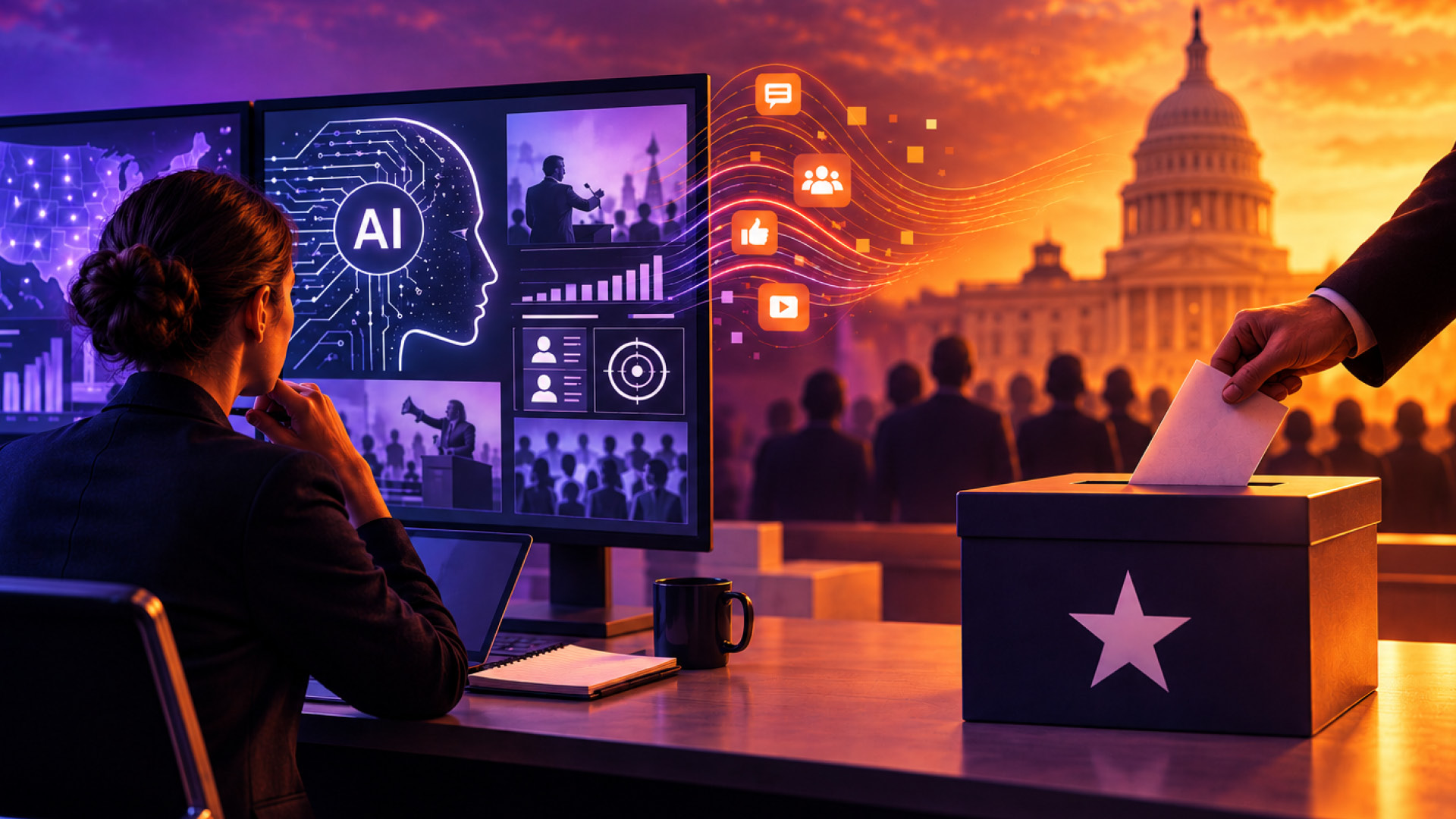
Campaigns have always been quick to embrace the next competitive edge. Television changed political advertising. Social media rewrote the rules of voter engagement. Data analytics made targeting more precise.
Now, AI is rewriting the campaign playbook.
And ahead of the 2026 midterms, it's doing a lot more than generating the occasional political ad.
A study commissioned by the American Association of Political Consultants earlier this year found that 83% of political professionals now use AI tools for work at least once a week, up from 59% just one year ago.
That's not experimentation anymore. AI is quickly becoming part of the infrastructure of modern campaigning.
Forget the Deepfakes. The Real AI Story Is Behind the Scenes.
Mention AI and elections in the same sentence and most people immediately think of deepfakes, synthetic images and "AI slop."
But some of AI's most consequential campaign applications are far less flashy, and largely invisible to voters.
A recent survey of campaign professionals reported by Campaigns & Elections found that 87% were using AI daily or several times a week. Among respondents, 77% said they were using it to increase productivity, roughly two-thirds for research and news monitoring, 59% to draft copy and 53% to generate advertising creative.
Think about what that means inside a campaign.
AI can summarize a day's worth of news coverage before the morning meeting. Research an opponent's record. Spot emerging issues. Generate message variations. Draft fundraising appeals. Brainstorm ad concepts. Turn a speech into a social post, an email and a digital ad.
None of that replaces political judgment. But it can compress hours of work into minutes.
And in a campaign where the news cycle moves by the hour, speed is a strategic advantage.
Listen Faster. Learn Faster. Move Faster.
Political strategy has always depended on understanding what voters care about and knowing when those attitudes are changing. AI can accelerate that process.
Research from Harvard Kennedy School published this year found that AI can speed up campaign content production and has demonstrated significant persuasive capabilities. But the research also makes an important point: AI's political impact depends on how organizations integrate it, not simply whether they have access to it.
After all, every campaign can access AI.
Not every campaign knows what to ask of it.
One Message. A Lot More Ways to Deliver It.
Campaigns have spent decades trying to solve the same communications challenge: How do you get the right message in front of the right voter at the right time?
AI doesn't change that objective. It changes how quickly campaigns can pursue it.
The Brennan Center for Justice has examined how generative AI can help political advertisers create personalized content at scale, potentially reducing the resources required to produce messaging for different audiences.
Consider a candidate discussing the same economic policy with a small-business owner, a suburban parent and a recent college graduate.
The policy hasn't changed.
The reason each voter should care about it might.
AI gives strategists more capacity to explore those distinctions, develop creative approaches and test what resonates.
That's not replacing strategy. It's giving strategists more ways to execute it.
This Isn't Theoretical Anymore
The 2026 midterms are already showing how quickly AI is entering political communications.
The Wesleyan Media Project reported in September that it had identified at least 164 political advertisements generated or enhanced using AI this election cycle, representing nearly $80 million in advertising spending.
A recent Washington Post analysis also found 39 congressional campaigns that disclosed payments to AI companies, while consultants told the Post that campaign use extends beyond what appears in public filings.
The AI revolution in politics may look less like robots replacing campaign managers and more like campaign managers suddenly getting a much bigger toolbox.
AI Can Move Fast. It Still Needs a Driver.
Faster, of course, isn't automatically better.
AI can hallucinate facts, flatten a candidate's distinctive voice, introduce bias or miss political nuance. And the ability to generate 100 messages in the time it once took to produce 10 isn't especially useful if none of them are any good.
The campaigns that make effective use of AI will still need human judgment, creativity, accuracy and oversight.
Political campaigns have always operated under three constraints: time, money and attention. AI can help stretch all three. It can help small teams accomplish more, analyze information faster, explore more creative ideas and respond more quickly to a changing communications environment.
But AI doesn't inherently understand the character of a candidate, the nuances of a district or the emotional currents driving an election.
Those are still strategic decisions.
And as the 2026 midterms approach, simply having access to AI won't be much of a differentiator.
The advantage will come from knowing what to ask of it, and, more importantly, what to do with the answers.
Samantha Pepi is Managing Director at Story Strategies Group.
 By Robert Philips
 By Chuck Sundin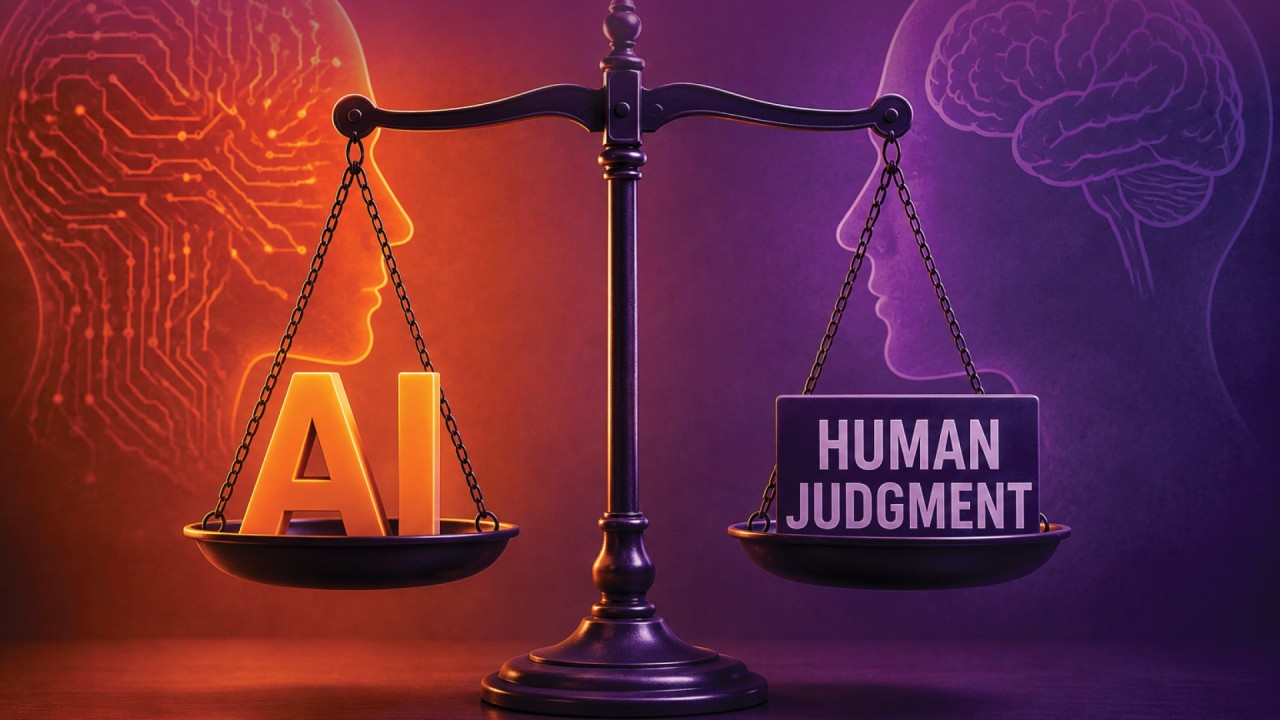
 By Gabrielle Massoud